
About
About Water Action Volunteers
Monitoring and Protecting Wisconsin’s Streams
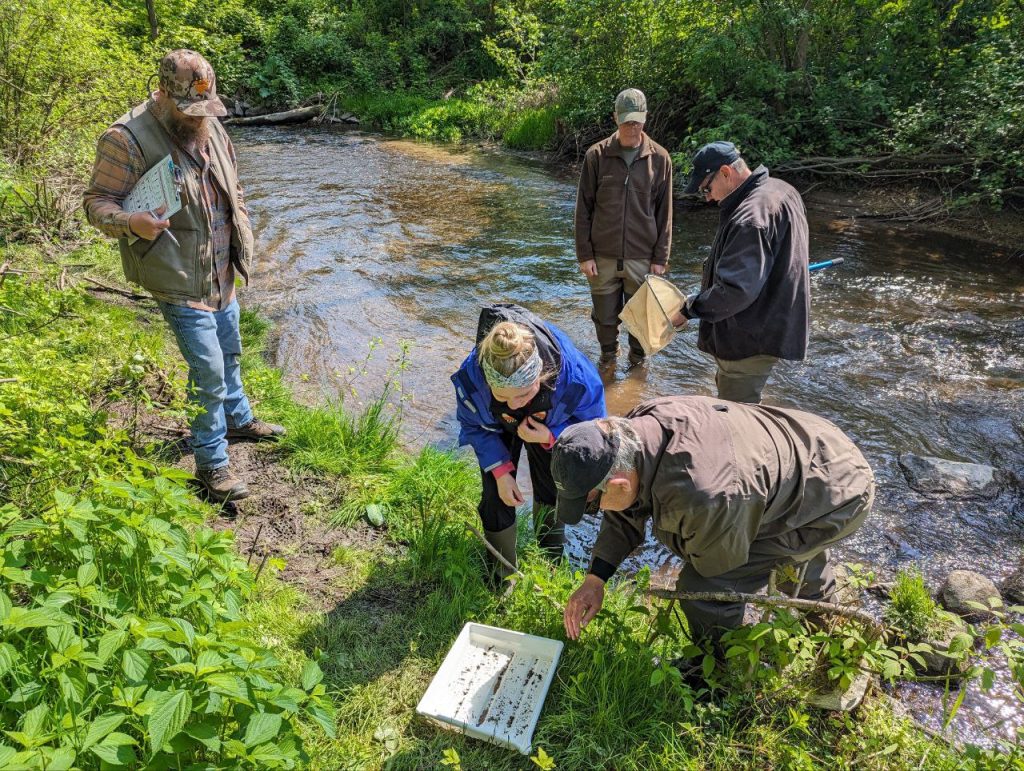
The Water Action Volunteers (WAV) program aims to preserve, protect, and restore Wisconsin’s 86,000+ miles of streams and rivers by educating and empowering volunteers to (1) gather high-quality stream data useful for decision-making and natural resource management, and (2) share their data and knowledge.
WAV is an ongoing partnership between the University of Wisconsin–Madison Division of Extension and the Wisconsin Department of Natural Resources, in collaboration with over 50 local groups and organizations.
Our Mission
We empower Wisconsin residents to take ownership of their local waterways through protection and improvement efforts based on hands-on learning, data collection and data reporting. Engaged volunteers and the data they collect benefit natural resource agencies and organizations, local communities, and the entire state of Wisconsin.
Our Vision
WAV aims to provide high-quality volunteer stream monitoring that engages residents in the rigorous collection of water quality data useful for managing Wisconsin’s natural resources.
WAV believes anyone can become a stream monitor! Our yearly trainings across Wisconsin focus on teaching volunteers how to gather high-quality stream data and building upon volunteer skills as they progress in their monitoring journey. No experience is necessary.
Annually, more than 500 volunteers monitor 600+ stream locations throughout the state.
Become a Volunteer
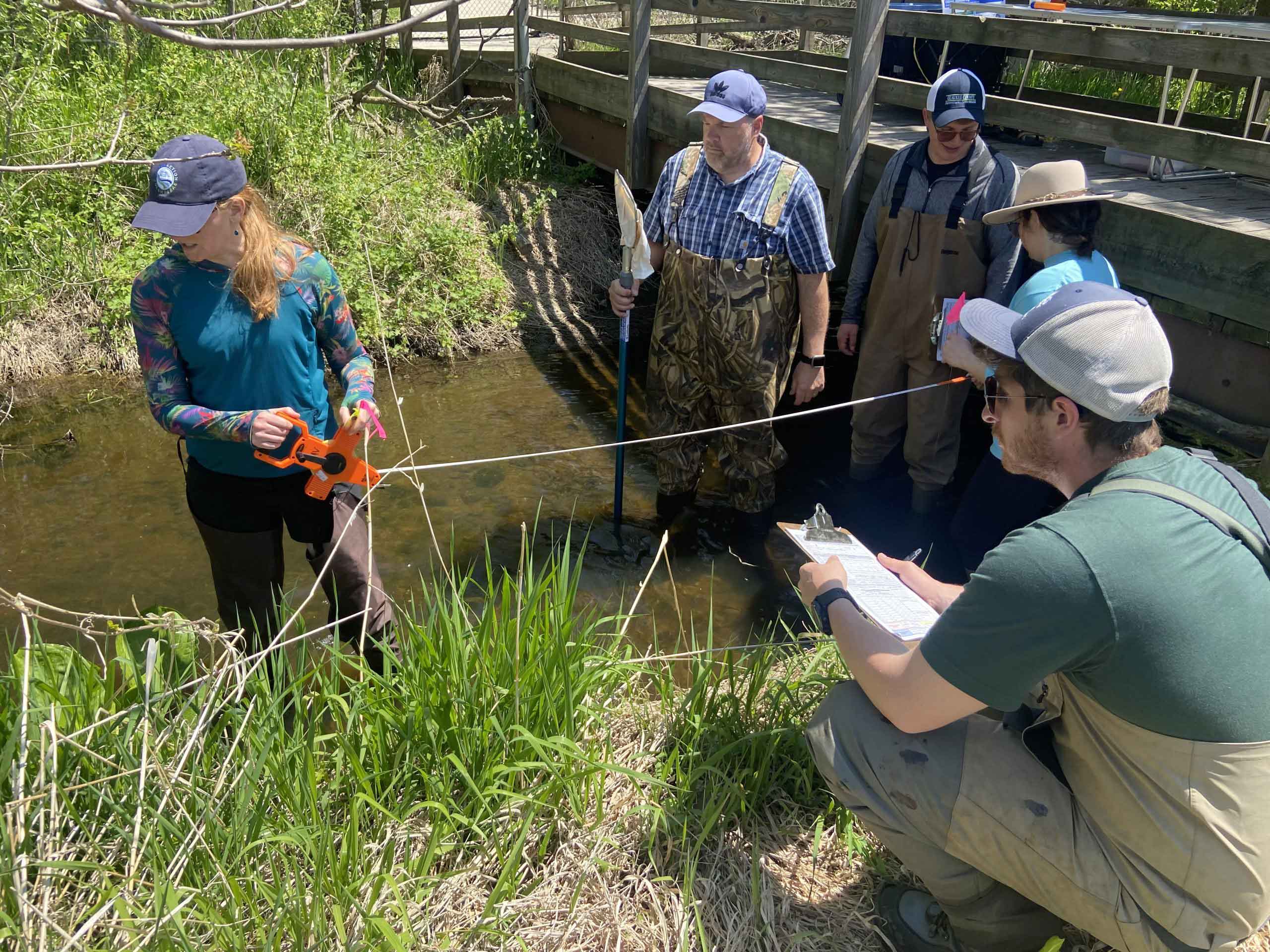
For new volunteers, our trainings include:
- Baseline Stream Monitoring – you’ll learn how to measure the six elements of stream health using scientific tools and techniques.
- AIS Monitoring with Project Riverine Early Detector (Project RED) – you’ll learn how to identify aquatic invasive species (AIS) and how to report them to help protect stream environments.
For continuing volunteers (1 year or more of WAV monitoring), our trainings include:
- Nutrient Monitoring – you’ll learn how to collect samples for total phosphorus, nitrogen, and total suspended solids.
- Continuous Temperature Monitoring – you’ll learn how to deploy and read devices called “thermistors” to monitor the temperature of the stream.
- Habitat Assessment Monitoring – you’ll learn how to combine visual observation, in-stream measurements, and photographs to assess the quality of the stream’s habitat for fish and other aquatic life.